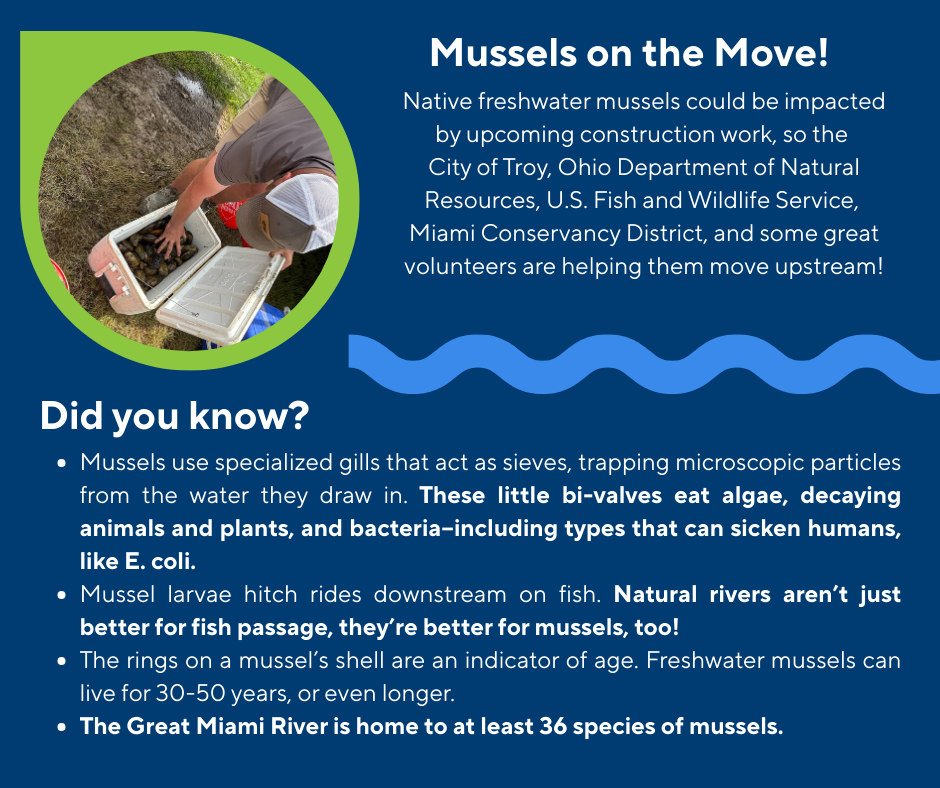
 In preparation for upcoming construction on the Great Miami River, the City of Troy and its partner agencies have successfully relocated more than 4,000 native freshwater mussels from the project area near Treasure Island Park.
The relocation effort was carried out by staff and contractors from the U.S. Fish and Wildlife Service, Ohio Department of Natural Resources, and Miami Conservancy District, with support from dedicated volunteers. Mussels were carefully collected, documented, and transported upstream in cool, aerated containers before being released back into the river in safe locations.
Freshwater mussels are a critical part of the river ecosystem, serving as both a food source for wildlife and a natural filter for the water. Often called the “liver of the river,” mussels remove bacteria and algae, helping to maintain water quality. By recording the species found during the relocation, biologists can monitor mussel populations and assess the overall health of the river.
The mussel relocation is part of the City’s broader low-head dam removal and river restoration project, which aims to improve water quality, enhance public safety, and restore natural habitat along the Great Miami River.